
You unboxed your Louis Vuitton Neverfull three months ago. The vachetta handles were that gorgeous pale cream — barely pink, pristine. Now they’re a deep honey that a New York or California owner wouldn’t see for a year or more. Your friend’s identical bag, purchased the same month in Chicago, still looks almost new. You’re starting to wonder if something is wrong with yours.
Nothing is wrong. Your vachetta is doing exactly what it’s designed to do — just much faster than you expected. South Florida’s combination of humidity, UV intensity, and heat creates the most aggressive patina-accelerating environment in the continental United States. The real question isn’t why it’s happening. It’s whether the darkening bothers you — and what you can realistically do about it either way. At Artbag, we’ve been guiding Louis Vuitton owners through this exact conversation since before the Neverfull existed.
What You’ll Learn
- What Vachetta Patina Actually Is at a Chemical Level
- Why Florida Accelerates Patina Faster Than Almost Anywhere
- How to Tell If Your Darkening Is Healthy Patina or Damage
- The Honest Answer: Should You Try to Slow It Down?
- Why South Florida Louis Vuitton Owners Choose Artbag
- Frequently Asked Questions
- Next Steps
What Vachetta Patina Actually Is at a Chemical Level
Vachetta is an untreated, vegetable-tanned cowhide that Louis Vuitton uses for handles, straps, trim, and bottom panels. Unlike virtually every other luxury leather, vachetta receives no protective coating, no pigment, and no sealant. The tanning process relies entirely on natural plant extracts — called vegetable tannins — which contain polyphenolic compounds that are chemically reactive when exposed to oxygen and light.
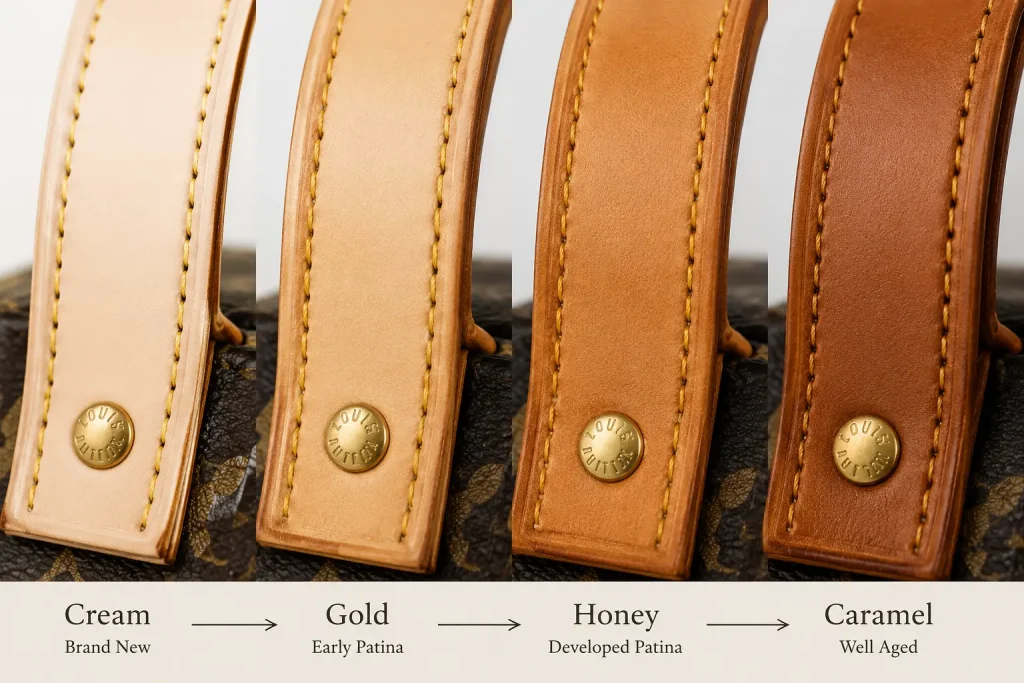
Patina is the visible result of those tannins oxidizing. The moment vachetta is exposed to air and light, those polyphenolic compounds begin reacting with atmospheric oxygen. This oxidation gradually shifts the leather’s color from pale cream through light gold, then honey, and eventually a rich caramel or deep brown over years of use.
The patina journey typically progresses through these stages:
- New (0–2 weeks): Pale cream to barely pink, pristine surface
- Early patina (1–3 months): Light golden tone beginning at contact points
- Developing patina (3–12 months): Warm honey color across most surfaces
- Mature patina (1–3 years): Rich caramel with character, darkest at handles
- Deep patina (3+ years): Dark brown with distinctive character markings
In South Florida, this timeline compresses dramatically. Collectors in Coral Springs, Fort Lauderdale, Boca Raton, and Palm Beach regularly report reaching the “developing patina” stage within weeks rather than months — a pace that catches many first-time Louis Vuitton owners completely off guard.
Why Florida Accelerates Patina Faster Than Almost Anywhere
Understanding the specific factors behind Florida’s accelerated patina helps you make informed decisions about whether to manage it or embrace it. In our 90+ years restoring luxury handbags across three generations, Artbag has developed deep expertise in how different climates affect untreated leather.
UV Radiation: The Primary Accelerant
Ultraviolet light is the strongest driver of tannin oxidation. South Florida receives among the highest UV exposure in the continental United States, with the UV index regularly reaching “extreme” levels during summer months. Even indirect sunlight — carrying your bag from car to store, walking through a parking lot, sitting near a window — provides enough UV energy to measurably accelerate the chemical reaction. Vachetta that sits in direct sunlight through a car windshield for even 30 minutes receives a dose of UV that would take hours to accumulate in a northern city like Boston or Seattle.
Humidity: The Silent Partner
South Florida’s 75–90% humidity doesn’t directly cause tannin oxidation, but it amplifies the process in two important ways. First, moisture in the leather slightly swells the fibers, exposing more tannin surface area to oxygen. Second, humidity carries and deposits microscopic contaminants — pollutants, salt particles, organic compounds — that darken the leather independently of the patina process itself. This is why Florida patina often looks slightly different from dry-climate patina: it develops with a richer, warmer undertone because it’s a combination of true tannin oxidation and environmental absorption.
Body Oils and Daily Chemical Contact
Every time you grip the handles, your natural skin oils — plus whatever sunscreen, lotion, or hand sanitizer you’ve applied — transfer directly into vachetta’s open pores. In South Florida, where sunscreen and sanitizer are virtually constant companions, this chemical contact happens more frequently and intensely than in cooler climates. Hand oils are actually the primary reason handles darken fastest: the combination of grip friction, warmth, and oil transfer creates a concentrated darkening zone that outpaces the rest of the vachetta significantly.
Heat Amplifying Everything
Higher temperatures accelerate chemical reactions, including tannin oxidation. South Florida’s ambient heat — both outdoor and inside parked cars — provides constant thermal energy that speeds every darkening process simultaneously. A bag left in a car during a Plantation or Weston errand accumulates heat-accelerated oxidation that simply doesn’t happen in the same timeframe in temperate regions.
How to Tell If Your Darkening Is Healthy Patina or Damage
Not all darkening is equal. Healthy patina and damage look similar to untrained eyes, but they’re fundamentally different:
- Even, gradual color transition = healthy patina. If the vachetta is darkening uniformly across broad areas — handles slightly faster than trim, which is normal — this is natural tannin oxidation doing exactly what it should.
- Distinct dark spots or rings = water damage. Isolated dark circles with visible tide marks are water stains, not patina. These indicate specific moisture incidents that displaced oils within the leather.
- Grayish or muddy discoloration = contamination. Healthy patina trends warm — golden, honey, caramel. If your vachetta is turning gray, greenish, or a muddy dark tone, environmental contaminants or mold may be responsible.
- Stiffness or cracking = dryness damage. Patina should not change the leather’s texture. If your vachetta feels stiff, rough, or shows cracking alongside the darkening, the leather has lost moisture and needs professional conditioning.
- Uneven blotchiness = oil or chemical damage. Random dark patches that don’t follow natural contact patterns suggest sunscreen, lotion, or other product absorption rather than natural patina development.
If you notice any of the damage indicators above, professional evaluation is recommended. Artbag can assess whether what you’re seeing is natural patina, manageable staining, or damage that needs intervention.
The Honest Answer: Should You Try to Slow It Down?
This is where Artbag’s approach differs from most: we think the answer depends entirely on your personal relationship with your bag. There’s no objectively “right” answer.
The Case for Embracing Patina
Many collectors — and Louis Vuitton themselves — consider patina a feature, not a flaw. A beautifully developed honey patina signals a well-loved, authentic bag. It makes each piece uniquely yours. Deeper patina actually makes vachetta more resistant to visible water spots and minor stains because the overall tone is darker, reducing contrast. And there’s something genuinely satisfying about watching untreated leather evolve from a living material into something that carries the story of your life with it. For South Florida owners, embracing patina also means freedom from anxiety — you stop worrying about every cloud in the sky and simply enjoy your bag.
The Case for Managing Patina
Other collectors prefer the pale, fresh look and want to preserve it as long as possible — especially on Damier Azur bags where lighter vachetta complements the canvas pattern. If you’re planning to resell, pristine pale vachetta commands premium prices on the secondary market because buyers associate it with newness and careful ownership. Managing patina in South Florida is possible, though it requires genuine commitment:
- Professional protective treatment from Artbag: We offer treatments calibrated for vachetta that create a UV-resistant barrier and slow tannin oxidation without altering the leather’s feel. This is the most effective single intervention for South Florida owners.
- Minimize direct UV exposure: Store bags away from windows, carry them inside reusable shopping bags when walking long distances outdoors, and never leave bags in cars where windshield UV concentrates.
- Clean hands before handling: Wash off sunscreen and hand sanitizer before gripping vachetta handles. Consider using a silk scarf or handle wrap for everyday carrying.
- Store properly between uses: Keep bags in breathable dust bags in dark closets with fresh silica gel packets replaced every two to three months.
What We Recommend
At Artbag, our honest advice is this: in South Florida, patina is coming whether you fight it or not. Professional treatment can slow the timeline meaningfully, but it won’t stop it. The most satisfied Louis Vuitton owners we serve are those who invest in professional protection to ensure their patina develops evenly and beautifully rather than trying to prevent it entirely. Even patina is gorgeous. Uneven, damaged darkening is what actually devalues a bag.
Why South Florida Louis Vuitton Owners Choose Artbag
When Boca Raton collectors, Fort Lauderdale fashion professionals, Parkland luxury enthusiasts, and Miami Louis Vuitton devotees need honest guidance about their vachetta, they choose Artbag because we tell the truth rather than selling unnecessary treatments.
After 90 years serving Manhattan’s elite on Madison Avenue, Artbag relocated to Coral Springs in 2022. Owner Chris Moore — a third-generation master craftsman trained by his father Donald Moore, who apprenticed under founder Hillel Tenenbaum starting in 1959 — has restored thousands of Louis Vuitton pieces across every era. When you bring us a vachetta concern, we’ll give you an honest assessment: is it healthy patina you can embrace, manageable staining we can address, or genuine damage that needs intervention? That distinction matters, and it’s where decades of hands-on experience makes the difference.
Frequently Asked Questions
How fast does vachetta patina develop in South Florida compared to other regions?
South Florida’s combination of extreme UV, high humidity, and year-round heat compresses the patina timeline significantly. What might take 12–18 months to reach a honey tone in New York or Chicago can happen in three to six months in Coral Springs, Fort Lauderdale, or Boca Raton. Daily-use bags develop patina fastest; stored bags darken more slowly but still faster than in drier climates.
Can vachetta patina be reversed or lightened once it’s developed?
Tannin oxidation is a permanent chemical change and cannot be truly reversed. Some surface staining and unevenness can be professionally addressed to improve the overall appearance, and Artbag can help even out patchy areas. However, lightening vachetta back to its original pale cream after significant patina has developed is not realistically possible without compromising the leather.
Does dark vachetta patina affect resale value?
It depends on the buyer. Even, warm honey or caramel patina is widely accepted and sometimes preferred by experienced collectors who see it as proof of authenticity and quality aging. However, pristine pale vachetta generally commands the highest resale prices because most buyers associate it with newness. Uneven, stained, or damaged vachetta consistently reduces value regardless of how dark it is.
Should I apply a consumer waterproofing spray to slow vachetta patina?
We generally advise against consumer sprays on vachetta. Many contain silicones that darken the leather immediately, alter its texture, block natural breathability, and create uneven finishes that look worse than natural patina. Artbag offers professional protective treatments specifically calibrated for vachetta that slow UV-driven oxidation without the risks consumer products carry.
Why do handles darken so much faster than the rest of the vachetta?
Handles receive the most concentrated exposure to hand oils, grip friction, and warmth from your body. In South Florida, sunscreen and hand sanitizer residue transfer onto handles constantly, adding chemical darkening on top of natural tannin oxidation. This combination makes handles the fastest-darkening area on any vachetta-trimmed bag by a significant margin.
Does Artbag offer patina evening services for vachetta that’s darkened unevenly?
Yes. Uneven patina — where some areas are significantly darker than others due to unequal exposure, oil transfer, or staining — is one of the most common vachetta services we perform. Our techniques blend color inconsistencies and restore a more uniform appearance while preserving the natural leather character. We also offer vachetta replacement for severely damaged trim.
Can I mail my Louis Vuitton to Artbag for vachetta assessment?
Absolutely. Email info@artbag.com with clear photos showing the current vachetta condition from multiple angles. We’ll provide an honest preliminary assessment and let you know whether the darkening is natural patina or something that needs professional attention. Artbag serves Louis Vuitton collectors nationwide through our secure mail-in service.
Next Steps: Get Honest Guidance for Your Vachetta
Key Takeaways:
- Vachetta patina is a natural chemical process (tannin oxidation) that South Florida’s UV, humidity, heat, and daily chemical contact accelerate dramatically
- Even, warm-toned patina is healthy and adds character; uneven, muddy, or damaged darkening indicates problems that may need professional attention
- Embracing patina or managing it are both valid choices — what matters most is ensuring it develops evenly
- Professional protective treatment is the most effective single intervention for South Florida owners who want to slow the timeline
Not Sure Whether Your Vachetta Needs Help?
Contact Artbag today for a free, no-obligation consultation:
- Call: (954) 688-3052
- Email: info@artbag.com (include photos of your vachetta from multiple angles)
- Visit: 927 N. University Drive, Coral Springs, FL 33071
- Hours: Mon–Fri 10 AM–5 PM, Sat 10 AM–2 PM
What to Expect:
Chris Moore or our expert team will evaluate your vachetta honestly, tell you whether what you’re seeing is healthy patina or something that needs attention, and recommend the right approach for your goals — no pressure, no unnecessary treatments. We serve Coral Springs, Fort Lauderdale, Plantation, Parkland, Weston, Boca Raton, Delray Beach, Palm Beach, West Palm Beach, Miami, Aventura, Coral Gables, and collectors nationwide through our secure mail-in service.
About the Author
Chris Moore is the owner and master craftsman at Artbag, where he continues a family tradition of luxury handbag restoration spanning three generations. Learning directly from his father Donald Moore — who trained under Artbag founder Hillel Tenenbaum beginning in 1959 — Chris brings over 30 years of hands-on experience to every restoration.
Featured in major fashion publications for his expertise in handbag design and care, Chris has restored thousands of luxury bags for collectors, celebrities, and fashion professionals. Under his leadership, Artbag relocated from Manhattan’s Madison Avenue to Coral Springs, Florida in 2022, bringing 90 years of New York craftsmanship excellence to South Florida.